
Harm reduction is an evidence-based, compassionate approach to substance use that focuses on reducing negative health and social impacts. It recognizes that people use substances for many reasons, and that safer use is better than unsafe use. With an unpredictable drug supply, it is an approach that focuses on keeping people safe and supporting health, without requiring people abstain from substances.
Harm reduction is both a philosophy and a set of practical approaches and programs. Harm reduction includes strategies like distributing sterile supplies, providing naloxone and overdose prevention education, and connecting people to supports and care.
Within the ongoing drug toxicity crisis, harm reduction is one of many critical tools—alongside prevention, treatment, and recovery supports—to keep people safe, build trust, and ensure that individuals can access care even when traditional health services may be out of reach.
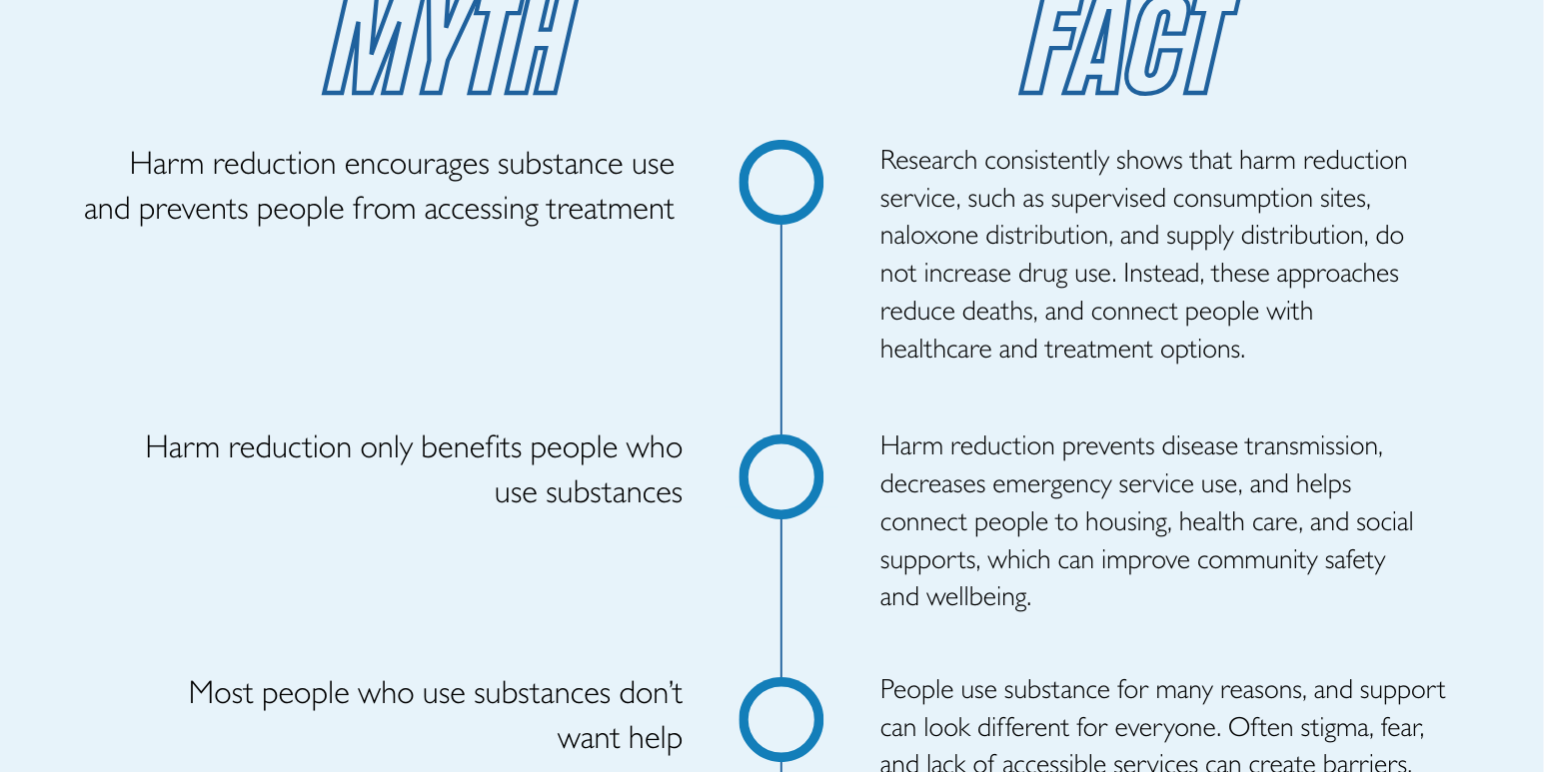
However, there is still a lot of misinformation surrounding harm reduction out there. We’ve created a resource to help dispel a few of the myths about harm reduction.
Learn more about some of the myths and facts surrounding harm reduction here